


Mastering Rental Property Maintenance for Maximum ROI
Rental property maintenance is the single most critical operational factor that dictates the long-term profitability of a real estate portfolio. While many accredited investors focus exclusively on acquisition metrics like cap rates and cash-on-cash returns, seasoned professionals understand that wealth preservation is achieved in the trenches of day-to-day property operations. A failure to properly maintain an asset not only erodes monthly cash flow through emergency repair bills but also accelerates physical depreciation, ultimately devastating the property’s resale value.
For high-net-worth individuals and real estate capital partners, shifting from a reactive mindset to a proactive maintenance strategy is the key to unlocking flawless returns. When an investment property is meticulously maintained, operational expenses drop, tenant satisfaction rises, and the asset’s physical integrity is preserved for decades. In this comprehensive guide, we will explore seven ultimate hacks for mastering rental property maintenance, transforming your real estate portfolio from a potential liability into a streamlined, passive income-generating machine.
The True Cost of Neglecting Rental Property Maintenance
The most expensive approach to property management is waiting for things to break. Neglecting rental property maintenance creates a cascading effect of financial destruction. When a minor issue, such as a small roof leak or a slow plumbing drain, is ignored, it inevitably evolves into a catastrophic failure. A minor leak becomes pervasive black mold requiring tens of thousands of dollars in professional remediation. A slow drain becomes a burst pipe that floods multiple units and destroys personal property.
Beyond the immediate physical damage, deferred maintenance directly impacts your rental property ROI by alienating quality tenants. High-quality renters—those who pay on time and respect the property—expect a habitable, well-functioning living environment. If a property manager is unresponsive to maintenance requests, good tenants will leave upon lease expiration. This triggers a vicious cycle of turnover costs, including marketing, make-ready renovations, and lost rent during vacancy periods.
Furthermore, physical neglect attracts a lower tier of tenant, often leading to increased evictions and further property abuse. For accredited investors looking to build generational wealth, understanding the dire financial consequences of deferred maintenance is the foundational step toward implementing robust property management solutions.
Proactive vs. Reactive Property Management Solutions
The evolution from a novice investor to an institutional real estate capital partner is marked by the adoption of proactive property management solutions. Reactive maintenance is strictly responding to tenant complaints and emergencies. It is chaotic, inefficient, and inherently more expensive due to emergency contractor premiums. Proactive maintenance, conversely, involves anticipating failures before they occur through systematic inspections and scheduled replacements.
Proactive management requires the implementation of a comprehensive preventative maintenance schedule. This includes servicing HVAC systems bi-annually, flushing water heaters annually, clearing gutter systems before hurricane season, and treating landscapes for pests quarterly. By scheduling these routine tasks, investors can negotiate favorable rates with vendors and ensure work is performed during normal business hours, avoiding costly after-hours emergency fees.
This shift not only stabilizes operating expenses but also dramatically improves tenant retention strategies. When tenants recognize that ownership is actively investing in the upkeep of the property, they feel valued and respected. This fosters a sense of community and long-term tenancy, which is the bedrock of consistent passive real estate income. To fully grasp the financial impact of these operational efficiencies, investors should review this authoritative guide on net operating income (NOI) from Investopedia, which illustrates how lowered maintenance expenses directly inflate property valuations.
Hack 1: Implement a Strict Preventative Maintenance Calendar
The first ultimate hack for flawless ROI is the establishment of a rigorous, 12-month preventative maintenance calendar. This calendar should be integrated into your property management software and automated to trigger work orders weeks in advance of required services.
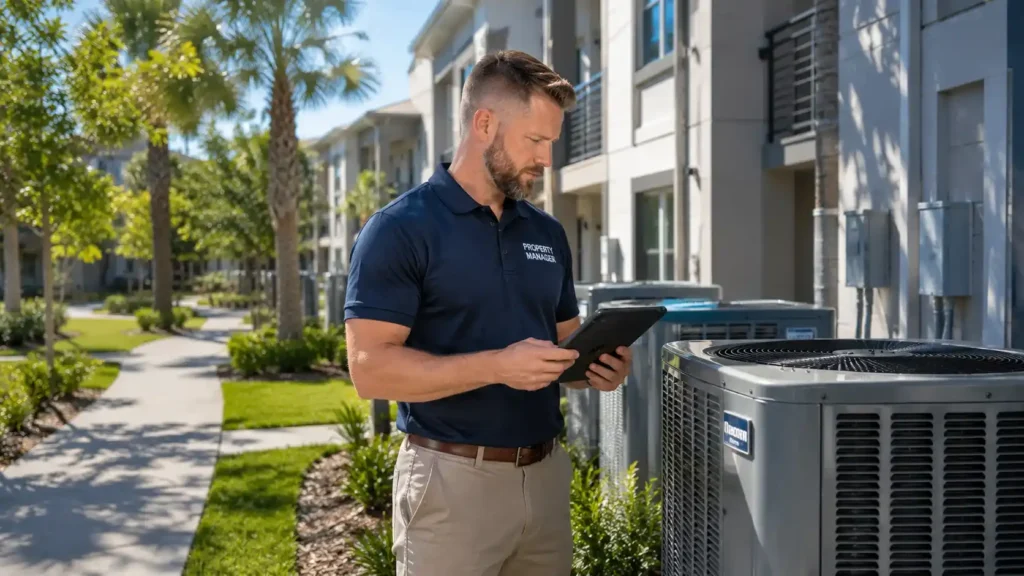
In Florida and other Sun Belt states, the most critical preventative maintenance occurs in the spring. HVAC systems must be inspected, cleaned, and serviced before the sweltering summer months arrive. An unmaintained HVAC unit consumes significantly more electricity and is highly prone to catastrophic compressor failure during peak demand, resulting in thousands of dollars in emergency replacement costs and angry tenants.
Similarly, in northern markets, fall preventative maintenance is crucial. Sprinkler systems must be winterized to prevent frozen pipes, and heating systems must be serviced before the first freeze. By dictating a strict calendar, property managers are no longer relying on their memory; the system enforces the maintenance protocol, ensuring no critical task slips through the cracks.
Hack 2: Build a Vetted, Reliable Vendor Network
A real estate portfolio is only as strong as the contractors who maintain it. The second hack for mastering rental property maintenance is the meticulous cultivation of a reliable, vetted vendor network. Far too many investors rely on cheap, unlicensed handymen to save a few dollars an hour, only to pay exponentially more when the handyman’s shoddy workmanship causes a larger failure.
Institutional property management solutions require a tiered vendor network. At the base level, you need a highly responsive, cost-effective general handyman for minor repairs (e.g., drywall patching, replacing fixtures). Above them, you must have licensed and insured trade specialists: a dedicated HVAC technician, a master plumber, a licensed electrician, and a roofing contractor.
To build this network, property managers must solicit multiple bids, verify licensing and insurance, and test their response times on low-stakes repairs. Once a reliable vendor is found, volume should be directed to them to negotiate preferred pricing and priority service. When a pipe bursts at 2:00 AM on a Sunday, having a trusted plumber who answers the phone and prioritizes your portfolio is worth its weight in gold.
Hack 3: Leverage Modern Property Management Technology
The third hack to maximize rental property ROI is the adoption of modern property management technology. The days of tracking maintenance requests via sticky notes and paper files are over. Sophisticated investors utilize comprehensive property management software platforms that streamline the entire maintenance lifecycle.
When a tenant identifies an issue, they submit a ticket through an online portal or mobile app. This software automatically logs the issue, notifies the assigned vendor, and tracks the progress of the repair until completion. Tenants can upload photos and videos of the problem, allowing contractors to arrive on-site with the correct tools and parts, eliminating wasteful repeat trips.
Furthermore, these platforms maintain a digital paper trail of every dollar spent on every unit. This data is invaluable for real estate capital partners. By analyzing maintenance histories, investors can identify recurring issues, spot underperforming properties, and accurately forecast future capital expenditures. This technological integration is a hallmark of professional real estate investment strategies.
Hack 4: Optimize Tenant Retention Strategies Through Communication
Mastering physical repairs is only half the equation; managing human psychology is the other. Hack number four focuses on utilizing rental property maintenance as a primary tool for tenant retention strategies. High turnover is the enemy of profitability. Every time a unit turns over, the investor loses a month of rent, pays for marketing, and incurs make-ready costs that often exceed $2,000.
The most effective way to retain quality tenants is through hyper-responsive, respectful communication regarding maintenance. When a tenant submits a maintenance request, the property manager should acknowledge receipt within 24 hours, providing a clear timeline for when a vendor will be dispatched.
Even if the repair cannot be completed immediately due to part backorders, proactive communication keeps the tenant informed and pacified. When tenants feel that ownership genuinely cares about their safety and comfort, they are highly likely to renew their leases, even if the market dictates a modest rent increase. Long-term tenancy stabilizes cash flow and eliminates the destructive churn of turnover costs.
Hack 5: Conduct Rigorous Bi-Annual Property Inspections
You cannot manage what you do not inspect. The fifth hack for flawless ROI is the execution of rigorous, bi-annual property inspections. Many property managers only inspect a unit when a tenant moves out. By that time, undiscovered damage—such as a slow leak under a sink or a hole in an exterior wall—has had months or years to compound into a massive expense.
A proactive property management protocol requires interior and exterior inspections every six months. These inspections must be documented with timestamped photos. Inspectors are looking for unreported maintenance issues, unauthorized pets, signs of hoarding, or illegal activities.
It is crucial to frame these inspections positively to the tenant. They should be presented as “preventative safety checks” to ensure smoke detectors work, plumbing is sound, and HVAC filters are clean. This not only protects the physical asset but also reinforces to the tenant that ownership is actively involved and attentive, further bolstering tenant retention.
Hack 6: Establish a Realistic CapEx Reserve Fund
The sixth hack shifts from operational tactics to financial underwriting. A common pitfall for real estate investors is failing to establish a realistic capital expenditure (CapEx) reserve fund. Rental property maintenance encompasses both routine repairs (operating expenses) and major component replacements (capital expenditures).
Roofs, HVAC systems, water heaters, and parking lot asphalt have finite lifespans. If an investor distributes 100% of their monthly cash flow and suddenly needs a $10,000 roof replacement, they are forced to seek emergency capital, diluting their returns.
A sophisticated real estate portfolio underwrites a CapEx reserve of $250 to $400 per unit, per year, directly into the operating budget. This money is swept into a separate, segregated account monthly. When the time comes to replace a major system, the capital is already there, protecting the investor’s liquidity. For official guidance on how these expenses are treated for tax purposes, investors and their CPAs should consult the IRS guidelines on real estate repairs and improvements, which dictate the critical difference between deductible repairs and capitalized improvements.
Hack 7: Transition to Institutional Property Management Solutions
The final hack is recognizing when to transition from self-management or retail property managers to institutional property management solutions. As an accredited investor’s portfolio grows, the sheer volume of maintenance requests, vendor management, and tenant communications becomes overwhelming.
There is a direct correlation between the size of a real estate portfolio and the need for professional, institutional-grade management. At a certain scale, continuing to self-manage ceases to be a cost-saving measure and becomes an opportunity cost that distracts the investor from higher-value activities like capital allocation and deal sourcing.
This is where partnering with a vertically integrated real estate firm becomes invaluable. Through a strategic Capital Partnership, investors can leverage an established infrastructure that includes in-house property management, general contractor responsibilities, and asset management teams. These professionals live and breathe operational efficiency, ensuring every dollar spent on maintenance yields a measurable return on investment.
How Maintenance Impacts Real Estate Investment Strategies
Understanding the interplay between physical upkeep and financial strategy is what separates novice landlords from institutional investors. Real estate investment strategies are not static; they must adapt based on the physical condition of the assets and the goals of the investor.
For investors focused on value-add real estate, aggressive maintenance and renovations are the core strategy. The goal is to purchase distressed assets, execute a massive preventative maintenance overhaul, modernize the units, and force appreciation. Once the asset is stabilized, the strategy shifts to a core-plus or income approach, where the focus pivots to rigorous preventative maintenance to protect the newly created equity.
For accredited investors seeking pure passive real estate income without the operational burden, the optimal strategy is to allocate capital into professionally managed private funds. By investing in vehicles like the CCG Income Fund, investors gain exposure to a diversified portfolio of stabilized, meticulously maintained assets. The fund handles all aspects of rental property maintenance, vendor management, and tenant relations, allowing the investor to enjoy truly passive distributions.
The Countrywide Capital Partners Advantage
At Countrywide Capital Partners, we understand that exceptional rental property maintenance is the bedrock of investor confidence. We do not view maintenance as a sunk cost; we view it as an investment in asset preservation and tenant satisfaction.
With over 20 years of institutional experience and a track record of facilitating over 3,500 residential remodels, our integrated execution platform controls the entire lifecycle of a property. From the moment of acquisition, our team implements rigorous preventative maintenance protocols, establishes vetted vendor networks, and utilizes cutting-edge property management technology to ensure flawless operations.
Whether you are a developer seeking fund-backed equity to execute a value-add renovation project through our CCG Growth Fund, or an accredited investor looking to transition your capital into a hands-off, professionally managed real estate portfolio, we have the operational expertise to protect and grow your capital. We do the heavy lifting on strategy, execution, and maintenance so you can partner with absolute confidence.
Frequently Asked Questions
Q: How much should I budget for rental property maintenance? A: A common rule of thumb is the 1% rule, which suggests budgeting 1% of the property’s value annually for maintenance. However, a more accurate method for multifamily assets is the per-unit-per-year rule, typically ranging from $250 to $500 per unit annually, plus a separate reserve for major capital expenditures.
Q: Can I deduct rental property maintenance from my taxes? A: Generally, yes. Routine maintenance and repairs (e.g., fixing a leak, painting a room) are considered deductible operating expenses in the year they are incurred. Major replacements, like a new roof, must be capitalized and depreciated over time. Always consult a licensed CPA for tax advice.
Q: What is the difference between maintenance and capital expenditures? A: Maintenance refers to routine, ongoing expenses required to keep the property in its current condition (e.g., HVAC servicing, unclogging drains). Capital expenditures (CapEx) refer to major renovations or component replacements that extend the property’s life or increase its value (e.g., replacing the roof, installing a new HVAC system).
Q: How does proactive maintenance increase my property’s value? A: Proactive maintenance increases value by maximizing the property’s Net Operating Income (NOI). By reducing emergency repair costs and minimizing tenant turnover, you lower operating expenses. Since commercial property values are derived from the NOI, lower expenses directly result in a higher asset valuation.
Ready to Optimize Your Real Estate Portfolio?
Do not let deferred maintenance and operational inefficiencies erode your wealth. Partner with our team to explore premium, professionally managed real estate investment opportunities. Whether you are looking to deploy capital into a diversified, hands-off fund or need strategic sponsorship for a development project, Countrywide Capital Partners is here to help.
Building wealth. Strengthening communities. Your trusted partner in real estate growth and wealth creation.